

By Michael Collins, Teravana
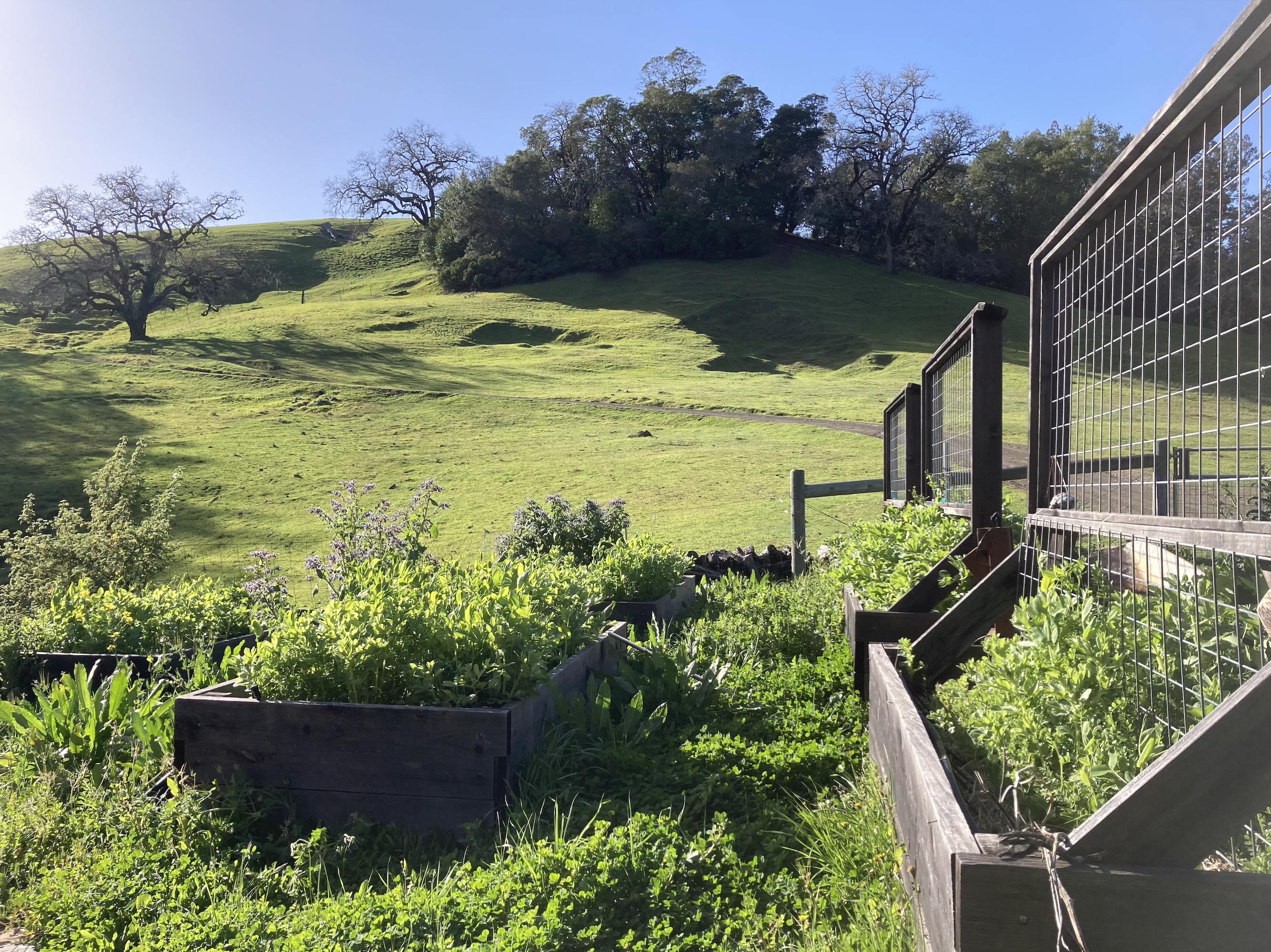
Teravana is completing the building of a community garden to share with all who visit. Youth from Sonoma County and beyond the local area will gain access to the outside and healthy physical activity and sunshine in a social environment, planting, maintaining, and eating healthy fresh food.
The garden will be a place to learn about indigenous farming practices and uplift community members whose voices have not been heard for generations, bringing back ecologically and culturally significant plants and animals. Diverse student bodies will engage in growing multicultural crops and increasing biodiversity in the garden.
Team Teravana has put a lot of time and thought into this project because we know how many lives it will reach, especially youth who have yet to spend much time in nature. Gardens and outdoor education have proven academic, vocational, health, social, and emotional benefits.
In contrast to many classroom settings, nature is a limitless, alive, and moving resource where plants and pollinators change daily. Because nature evolves rapidly, it attracts and stimulates a child’s attention, increasing the capacity to retain information and ideas. As a result, the experience of nature’s detail inspires and encourages children’s need to understand and comprehend what they are seeing and experiencing (Blair, 2009).
Time in gardens also opens eyes and doors to careers in the growing green jobs market. According to the Bureau of Labor Statistics (2020), starting from 2016, by 2026, jobs for environmental scientists and specialists will have grown by over 11%, environmental engineers by 9%, and conservation scientists by over 6%. For many, time outside will be more than a one-time experience, inspiring a student to find other pathways to nature or taking on an environmental internship.
Studies have shown the benefits go on and on. The freedom of collaborative learning and spending the day, or part of the day, outside can help students understand others, develop a sense of community, and comprehend their place in the world. It can create an environment where children treat each other with care and civility and exhibit self-discipline (SEER).
So, why have a community garden at Teravana? The living classroom of the garden will open the door to the broader ecosystem, a chance to learn how healthy forests contribute to a thriving garden and vice versa. The garden will mimic and coexist with other practices, like incorporating traditional ecological knowledge and holistic grazing management, all interconnected and working towards a healthy forest. The garden and edible trees will yield the crops to be shared and learned about adding an essential layer to a successful food forest.